
Introduction
Search Engine Optimization (SEO) is one of the most effective ways to increase your website's visibility, attract qualified visitors, and build long-term online success. Whether you run a personal blog, business website, online store, or SaaS platform, improving your SEO helps potential customers discover your content through search engines without relying entirely on paid advertising. Understanding the fundamentals of SEO is the first step toward achieving sustainable organic growth and staying competitive in today's digital landscape.
What Is SEO?
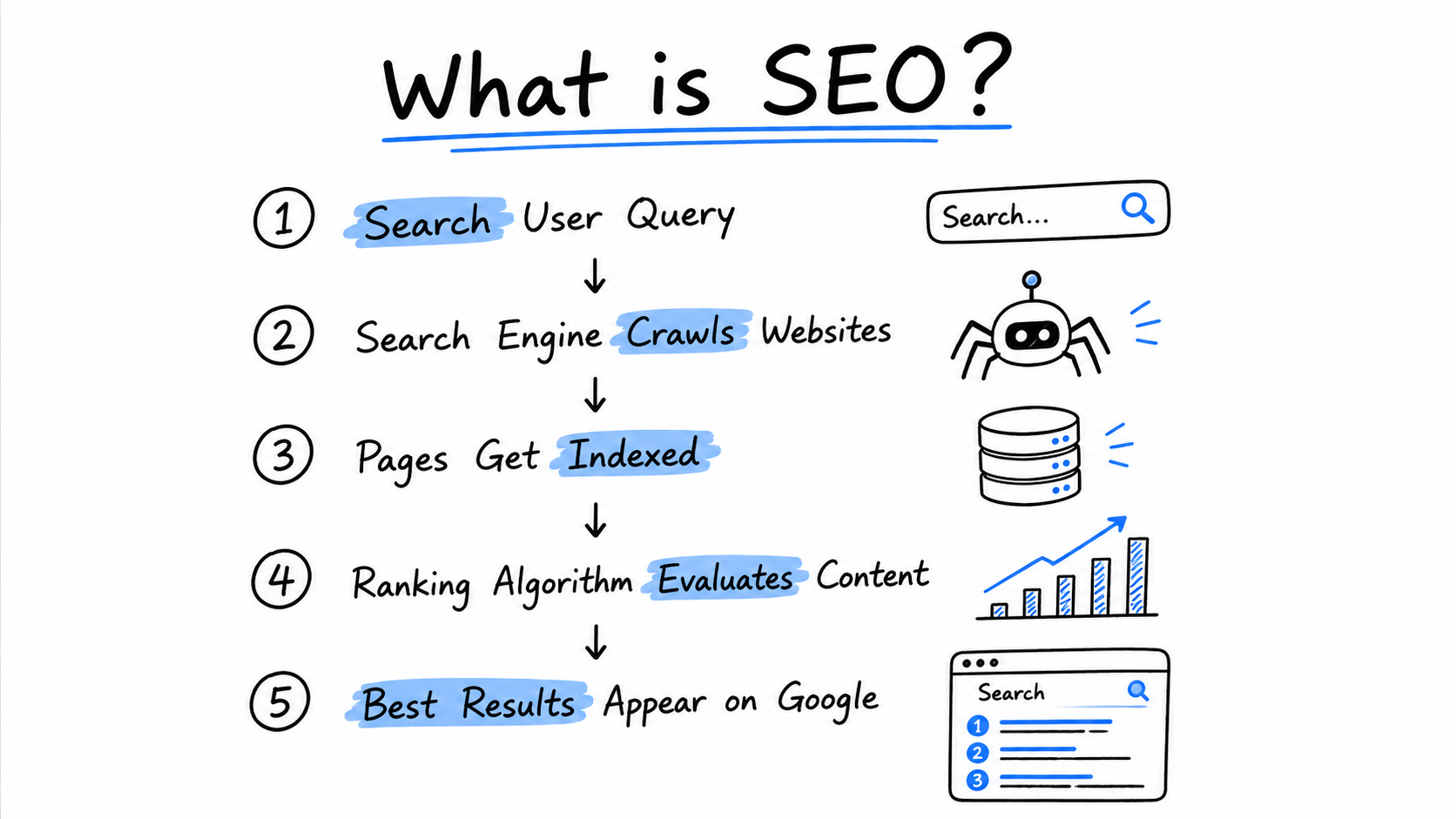
SEO, short for Search Engine Optimization, is the process of improving a website so it ranks higher in search engine results for relevant keywords and topics. By optimizing your content, website structure, technical performance, and user experience, search engines such as Google, Bing, and other search platforms can better understand your pages and determine when they should appear in search results.
The primary goal of SEO is to increase organic traffic, which refers to visitors who find your website naturally through search engines rather than through paid advertisements. Unlike paid traffic, where you pay for every click, organic traffic can continue generating visitors over time, making SEO one of the most cost-effective digital marketing strategies for businesses of all sizes.
Modern SEO goes beyond simply adding keywords to a webpage. It involves creating helpful content, optimizing website speed, improving mobile usability, implementing structured data, earning quality backlinks, and providing an excellent user experience. Together, these elements help search engines recognize your website as trustworthy, relevant, and valuable to users.
Why SEO Is Important
Effective SEO increases your website's visibility by helping your pages appear for searches that matter to your audience. Higher rankings often lead to more clicks, more visitors, and greater opportunities to generate leads, sales, or subscriptions. Since most users rarely look beyond the first page of search results, improving your SEO can have a significant impact on your online success.
Strong SEO also builds credibility and trust. Websites that consistently rank well are often viewed as more authoritative and reliable by users. Publishing high-quality content, maintaining a secure and fast website, and providing a positive user experience all contribute to establishing your brand as a trusted source of information within your industry.
Unlike short-term marketing campaigns, SEO delivers long-term value. Well-optimized content can continue attracting visitors for months or even years after it is published. Combined with a strong content strategy and ongoing optimization, SEO not only drives consistent traffic but also improves conversion rates by connecting your website with users who are actively searching for the products, services, or information you provide.
How Search Engines Work
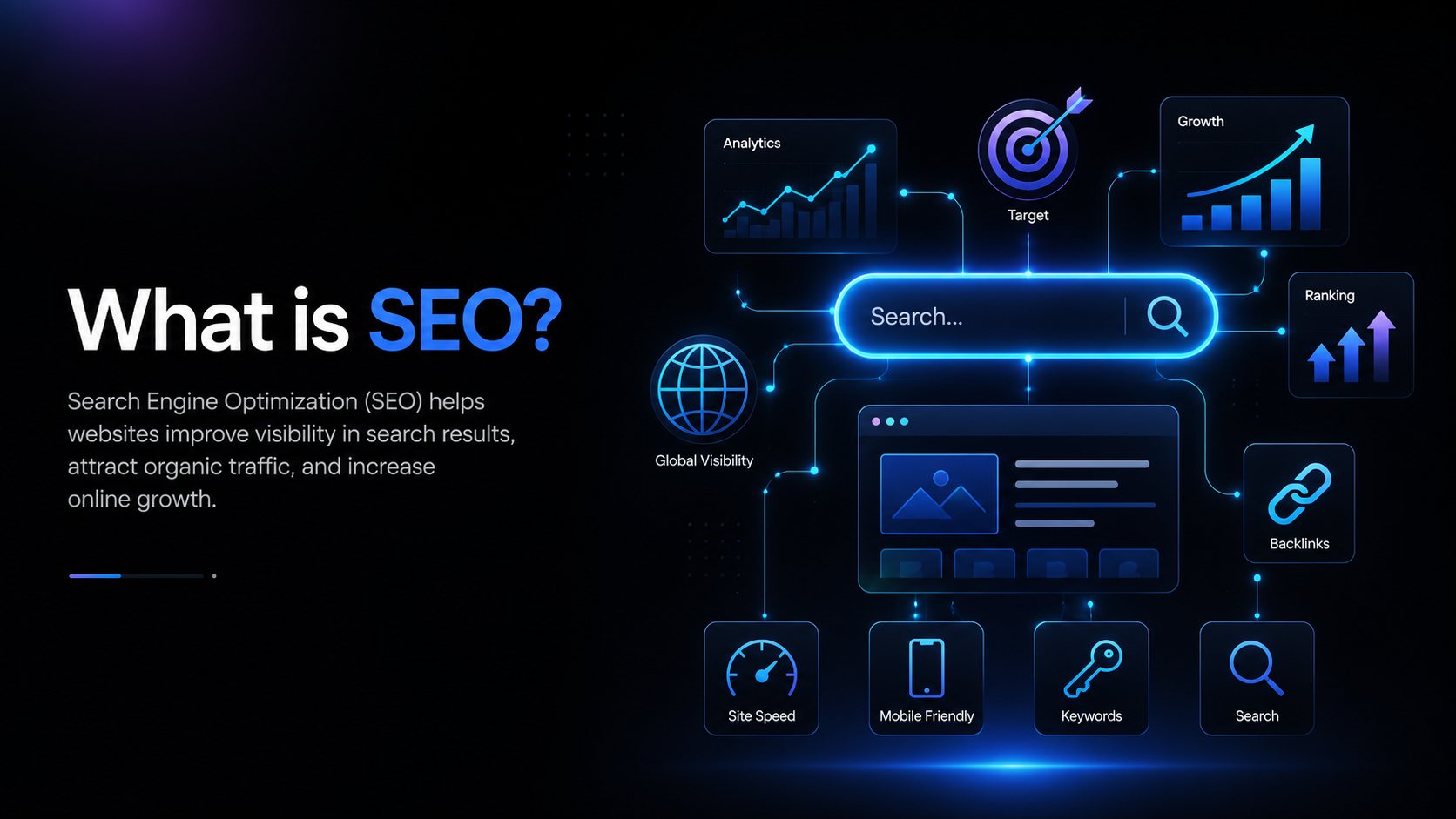
Before learning how to improve SEO, it's important to understand how search engines discover, organize, and rank web pages. Every time someone searches on Google, Bing, or another search engine, complex algorithms evaluate billions of web pages to deliver the most relevant and trustworthy results. This process generally consists of three key stages: crawling, indexing, and ranking. Optimizing your website for each stage helps search engines understand your content and increases your chances of appearing higher in search results.
Crawling
Crawling is the process where search engines discover new and updated web pages using automated programs known as search engine crawlers, spiders, or bots. These bots continuously travel across the internet by following links from one page to another, collecting information about websites and identifying newly published or updated content.
To make crawling easier, websites should have a clear navigation
structure, properly connected internal links, an XML sitemap, and avoid
blocking important pages through the robots.txt file.
Well-organized websites help search engine bots discover content more
efficiently, ensuring new pages have a better chance of appearing in
search results.
If a search engine crawler cannot access a page because of broken links, server errors, or blocked resources, that page may never appear in search results. Improving crawlability is therefore one of the fundamental aspects of technical SEO.
Indexing
After a page has been crawled, the search engine analyzes its content and decides whether it should be added to its search index. The search index is a massive database that stores information about billions of web pages, including their content, keywords, images, structured data, and other important signals. Only pages that are successfully indexed are eligible to appear in search results.
During indexing, search engines evaluate page titles, headings, metadata, images, links, and overall content quality to understand what a page is about. Duplicate content, thin pages, incorrect canonical tags, or "noindex" directives can prevent pages from being indexed, limiting their visibility in search engines.
Creating unique, helpful, and well-structured content significantly improves the chances of successful indexing. Monitoring your indexed pages through Google Search Console also helps identify issues that may prevent your content from appearing in search results.
Ranking
Once a page has been indexed, search engines determine where it should appear in search results through a process known as ranking. Modern search engines use hundreds of ranking signals to evaluate each page and decide which results best match a user's search query. The goal is to provide the most relevant, trustworthy, and helpful information for every search.
Important ranking signals include high-quality content, keyword relevance, search intent, page speed, mobile friendliness, HTTPS security, user experience, structured data, backlinks from authoritative websites, Core Web Vitals, internal linking, and overall website credibility. Search engines also use artificial intelligence and machine learning to better understand context rather than relying solely on keywords.
Improving your rankings requires continuous optimization rather than a single change. Publishing valuable content, maintaining excellent technical SEO, earning quality backlinks, and providing a fast, user-friendly experience all contribute to stronger search rankings and sustainable organic traffic over the long term.
Types of SEO
Search Engine Optimization is not a single activity but a combination of multiple strategies that work together to improve a website's visibility in search results. Each type of SEO focuses on a different aspect of your website, from optimizing content and improving technical performance to building authority and attracting local customers. Understanding these SEO categories helps you create a well-rounded optimization strategy that delivers sustainable, long-term growth.
On-Page SEO
On-page SEO focuses on optimizing the content and HTML elements of individual web pages so search engines can better understand their purpose. This includes using relevant keywords naturally throughout your content, writing compelling page titles and meta descriptions, creating descriptive headings, optimizing image file names and alt text, and publishing original, high-quality content that satisfies user intent. Every element on a page should help both users and search engines understand what the content is about.
Internal linking is another important part of on-page SEO because it connects related pages, distributes authority across your website, and helps search engine crawlers discover additional content. Well-optimized pages with clear structure, useful information, and relevant keywords are more likely to rank higher and provide a better user experience.
Off-Page SEO
Off-page SEO refers to activities that take place outside your website to improve its reputation and authority. The most influential factor is earning high-quality backlinks from trustworthy and relevant websites. When reputable websites link to your content, search engines interpret those links as signals that your website provides valuable information, which can improve your rankings.
Besides backlinks, brand mentions, online citations, digital PR, guest posting, and social visibility also contribute to building authority. Although social media shares are not direct ranking factors, increased brand awareness often leads to more backlinks, mentions, and traffic, strengthening your website's overall online presence.
Technical SEO
Technical SEO ensures that search engines can efficiently crawl, index, and understand your website. It involves optimizing website speed, mobile responsiveness, HTTPS security, XML sitemaps, robots.txt files, canonical URLs, structured data (Schema Markup), and overall site architecture. A technically optimized website makes it easier for search engines to access your content while delivering a faster and smoother experience for visitors.
Modern technical SEO also emphasizes Google's Core Web Vitals, which measure loading performance, responsiveness, and visual stability. Websites that load quickly, perform well on mobile devices, and provide a secure browsing experience are more likely to achieve better rankings and higher user satisfaction.
Local SEO
Local SEO helps businesses appear in location-based searches, making it especially valuable for restaurants, clinics, retail stores, agencies, and service providers. Optimizing your Google Business Profile, collecting genuine customer reviews, maintaining consistent Name, Address, and Phone Number (NAP) information, and targeting local keywords all improve your chances of appearing in local search results and Google Maps.
Building local citations across trusted directories and creating content relevant to your service areas further strengthens local visibility. Businesses with complete profiles, positive reviews, accurate business information, and strong local relevance are more likely to attract nearby customers who are actively searching for their products or services.
E-commerce SEO
E-commerce SEO focuses on improving the visibility of online stores and product pages. This includes optimizing product titles, descriptions, categories, images, URLs, and metadata while targeting keywords that shoppers are likely to search for. Well-organized category pages and clear navigation help both users and search engines discover products more efficiently.
Customer reviews, product ratings, availability, pricing information, and structured data play an important role in e-commerce SEO. Implementing product schema enables rich snippets that may display ratings, prices, and stock status directly in search results, improving visibility and increasing click-through rates from potential customers.
GEO and AEO: The Future of Search Engine Optimization
Search Engine Optimization has evolved significantly over the past few years. While traditional SEO focuses on improving rankings in search engines like Google and Bing, modern search experiences increasingly rely on artificial intelligence to generate direct answers for users. This shift has introduced two important concepts: Generative Engine Optimization (GEO) and Answer Engine Optimization (AEO). Together, these strategies help businesses create content that is not only discoverable in search results but also more likely to be referenced, summarized, and recommended by AI-powered search platforms and digital assistants.
What Is GEO (Generative Engine Optimization)?
Generative Engine Optimization (GEO) is the practice of optimizing content so it can be understood, trusted, and referenced by AI-powered search engines and conversational assistants. Unlike traditional search engines that display a list of links, AI platforms generate complete answers by analyzing information from multiple reliable sources. Examples include ChatGPT, Google Gemini, Claude, Perplexity AI, and Microsoft Copilot, all of which use advanced language models to summarize information and answer user questions.
GEO focuses on creating content that is comprehensive, accurate, and easy for artificial intelligence to interpret. Well-structured articles, clear explanations, factual information, and strong topical coverage increase the likelihood that AI systems will reference your content when generating responses. Rather than optimizing solely for rankings, GEO aims to make your content valuable enough to become part of AI-generated answers.
As AI search continues to grow, websites that demonstrate expertise, publish trustworthy information, and organize content logically will have a greater opportunity to be cited or recommended across multiple AI platforms, helping them reach users beyond traditional search engine results.
How GEO Works
AI search engines do not simply rank websites based on keywords. Instead, they evaluate multiple sources to identify the most reliable and relevant information before generating a response. These systems analyze content quality, factual accuracy, semantic relationships, structured data, and topical depth to determine which sources deserve to be referenced.
Strong authority and well-defined entities also play a significant role. Websites that consistently publish expert content, cover topics in depth, and demonstrate trustworthiness are more likely to become trusted sources for AI-generated answers. Structured headings, schema markup, concise explanations, and logically organized content further improve AI's ability to understand and summarize information accurately.
Instead of focusing only on keyword density, GEO encourages creating content that thoroughly answers user questions, provides context, uses clear language, and remains up to date. This approach benefits both AI search engines and traditional search rankings.
What Is AEO (Answer Engine Optimization)?
Answer Engine Optimization (AEO) focuses on creating content that directly answers user questions. Rather than encouraging users to browse multiple pages, answer engines aim to deliver immediate, accurate responses through featured snippets, AI overviews, voice assistants, and "People Also Ask" results. AEO helps your content become the source of those quick answers.
Effective AEO content is written using clear questions, descriptive headings, concise explanations, FAQ sections, and structured formatting that makes information easy to extract. Search engines and AI systems prefer content that answers a specific question within the first few sentences before expanding into more detailed explanations.
As voice search and AI assistants continue to grow in popularity, optimizing for AEO helps websites reach users who expect immediate answers instead of traditional lists of search results. Combining AEO with strong SEO and GEO creates content that performs well across both search engines and AI-powered answer platforms.
Best Practices for GEO and AEO
To succeed in both GEO and AEO, focus on creating content that is helpful, trustworthy, and easy to understand. Use descriptive headings, answer important questions early, organize information with logical H2 and H3 sections, and support your content with structured data such as Schema Markup. Clear formatting, bullet points, tables, and FAQ sections also improve readability for both users and AI systems.
Building topical authority is equally important. Publish comprehensive content, keep articles updated, demonstrate expertise, and maintain factual accuracy. Rather than optimizing only for keywords, focus on entities, search intent, and complete topic coverage. By combining traditional SEO with GEO and AEO strategies, you can improve visibility across search engines, AI-generated search experiences, and modern answer platforms.
Keyword Research
Keyword research is the foundation of every successful SEO strategy. It helps you understand what your target audience is searching for, how often they search for those topics, and how difficult it is to rank for them. Instead of guessing what users want, keyword research provides valuable insights that allow you to create content matching real search behavior and user intent. Choosing the right keywords increases your chances of attracting qualified organic traffic and improving search engine rankings.
Modern keyword research goes beyond simply finding high-volume search terms. It also considers search intent, keyword competition, topical relevance, semantic relationships, and user behavior. Understanding these factors helps you publish content that satisfies both search engines and your audience.
Search Intent
Search intent refers to the primary reason behind a user's search query. Understanding intent allows you to create content that directly answers what users are looking for. Search engines prioritize pages that best satisfy user intent rather than simply matching keywords. There are four primary types of search intent.
Informational
Users want to learn something or find an answer.
- What is SEO?
- How to improve SEO
- What is JSON?
Navigational
Users are trying to visit a specific website or page.
- YouTube
- Facebook Login
- Google Search Console
Commercial
Users are researching before making a purchase.
- Best SEO tools
- Ahrefs vs SEMrush
- Best web hosting
Transactional
Users are ready to complete an action or purchase.
- Buy SEO course
- Download JSON Formatter
- Sign up for hosting
Creating content that matches the correct search intent significantly increases your chances of ranking well. For example, someone searching "What is Technical SEO?" expects an educational article, while a user searching "Buy SEO Software" expects a product or pricing page. Understanding this difference allows you to publish the right type of content for each audience.
Search engines like Google have become increasingly sophisticated at understanding user intent through artificial intelligence and semantic search. Rather than relying only on exact keyword matches, they evaluate whether a page fully answers the user's question. Content that aligns with search intent typically achieves higher engagement, lower bounce rates, and stronger search rankings.
Before targeting any keyword, always ask yourself what the user hopes to accomplish. Building content around user intent instead of simply inserting keywords creates a better experience for readers while helping search engines recognize your content as relevant and helpful.
Long-Tail Keywords
Long-tail keywords are longer, more specific search phrases that target a particular topic, product, or user need. While these keywords usually have lower monthly search volume than broad keywords, they often attract visitors with a much clearer intent. Because users searching with detailed queries know exactly what they want, long-tail keywords typically generate higher engagement and better conversion rates.
Short-Tail Keywords
Broad and highly competitive
- ❌ Very broad search intent
- ❌ Extremely competitive
- ❌ Lower conversion rate
- ❌ Difficult to rank for new websites
- ❌ High search volume
Example Keywords
Long-Tail Keywords
Specific and easier to rank
- ✅ Clear user intent
- ✅ Lower competition
- ✅ Higher conversion rate
- ✅ Easier for new websites to rank
- ✅ Highly targeted traffic
Example Keywords
For example, the keyword "SEO" is extremely broad and highly competitive because thousands of authoritative websites compete for it. In contrast, a phrase such as "how to improve SEO for a small business website" is much more specific and targets users who are actively searching for a detailed solution. Although fewer people search for this phrase, those who do are generally more engaged and more likely to take action.
Long-tail keywords also align better with modern search behavior. Instead of typing only one or two words, users increasingly search using complete questions and conversational phrases, especially when using AI assistants, voice search, and mobile devices. Creating content around these natural-language queries improves visibility in both traditional search engines and AI-powered search platforms.
Rather than focusing on a single keyword, it's also important to include closely related terms, synonyms, and semantically relevant phrases throughout your content. Search engines use semantic analysis to understand the overall topic of a page, making comprehensive content more valuable than repeating the same keyword multiple times.
SEO Best Practice
New websites should prioritize long-tail keywords before targeting highly competitive keywords. Ranking for several specific search queries is often easier and can generate consistent organic traffic while gradually building your website's authority for broader topics.
Keyword Difficulty
Keyword Difficulty (KD) estimates how challenging it is to rank on the first page of search results for a specific keyword. SEO tools calculate this score by analyzing factors such as the authority of competing websites, the quality and number of backlinks, search intent, and the overall competitiveness of the topic. Understanding keyword difficulty helps you choose realistic opportunities that match your website's authority and growth stage.
Keyword Difficulty Scale
Easier → HarderEasy
KD: 0–20
Excellent for new websites and niche blogs.
Medium
KD: 21–40
Requires quality content and good on-page SEO.
Difficult
KD: 41–60
Strong backlinks and authority become increasingly important.
Very Difficult
KD: 61+
Usually dominated by established brands and high-authority websites.
High keyword difficulty does not necessarily mean you should avoid a keyword, but it does require a stronger SEO strategy. Websites with high-quality content, topical authority, trusted backlinks, and excellent user experience have a greater chance of competing for these searches. New websites generally achieve better results by targeting lower-difficulty keywords before expanding into broader, more competitive topics.
When evaluating keywords, always consider difficulty alongside search intent, topical relevance, and business goals rather than relying on a single metric.
Search Volume
Search volume represents the estimated number of times a keyword is searched during a specific period, usually per month. It helps identify how popular a topic is and whether there is enough demand to justify creating content around it. However, higher search volume often comes with increased competition, making it important to balance popularity with ranking opportunities.
High Search Volume
Large number of monthly searches with high competition.
Example
SEO
Medium Search Volume
Balanced opportunity with moderate competition.
Example
Technical SEO Guide
Low Search Volume
Smaller audience but highly targeted and often easier to rank.
Example
How to improve SEO for a local bakery
Many beginners focus only on keywords with the highest search volume, assuming they will generate the most traffic. In reality, highly competitive keywords can be difficult to rank for, especially on newer websites. A combination of medium- and low-volume long-tail keywords often produces more consistent organic traffic and higher conversion rates because these searches usually reflect stronger user intent.
The best keyword opportunities balance search volume, keyword difficulty, and search intent. Rather than chasing the largest numbers, focus on keywords that are relevant to your audience, achievable for your website, and capable of delivering meaningful business results over the long term.
Create High-Quality Content
High-quality content is one of the most important ranking factors in modern SEO. Search engines aim to provide users with the most helpful, accurate, and trustworthy information for every search query. Simply publishing articles filled with keywords is no longer enough. Instead, successful content focuses on solving real problems, answering user questions, and delivering genuine value. When readers find your content useful, they spend more time on your website, interact with additional pages, and are more likely to share or link to it—all of which send positive signals to search engines.
Creating valuable content requires understanding your audience's needs, matching search intent, organizing information clearly, and presenting it in a way that is easy to read. Whether you publish blog posts, tutorials, product pages, or guides, every piece of content should help users accomplish a specific goal. Websites that consistently publish useful, well-structured, and original content are more likely to build authority, earn backlinks, and achieve sustainable organic growth over time.
Helpful Content
Helpful content is written primarily for people rather than search engines. Instead of focusing on keyword density or ranking tricks, it provides accurate information, practical advice, and complete answers that satisfy the reader's intent. Google's Helpful Content System rewards pages that demonstrate genuine expertise, originality, and usefulness while discouraging thin, repetitive, or AI-generated content created solely to attract search traffic.
Helpful Content Checklist
Before publishing any article, ask yourself these questions.
Solves a Problem
Answers the user's question completely instead of providing only basic information.
Original Content
Offers unique insights, examples, explanations, or practical experience instead of copying competitors.
Easy to Read
Uses headings, short paragraphs, lists, images, and simple language for better readability.
Matches Search Intent
Delivers exactly what users expect when searching for the target keyword.
Uses Reliable Sources
Supports important claims with trustworthy data, research, or industry references whenever appropriate.
Provides Value
Leaves readers with actionable knowledge that helps them complete their task successfully.
Helpful content should demonstrate a clear understanding of the topic while remaining easy for readers to follow. Avoid publishing articles that simply repeat information available on hundreds of other websites. Instead, include practical examples, screenshots, step-by-step instructions, real-world use cases, and actionable recommendations that genuinely help readers solve their problems.
Content should also be comprehensive enough to answer related questions users may have. For example, an article about image optimization should explain compression, file formats, alt text, lazy loading, and image SEO best practices rather than covering only one aspect of the topic. Comprehensive resources often perform better because they satisfy multiple search intents within a single page.
Above all, focus on creating content that readers would confidently recommend to others. If your article genuinely educates, solves problems, and improves the user's experience, it is far more likely to earn backlinks, social shares, repeat visitors, and stronger search engine rankings over time.
EEAT (Experience, Expertise, Authoritativeness & Trustworthiness)
EEAT is a quality framework used by Google to evaluate the credibility, reliability, and overall quality of content. While EEAT is not a direct ranking factor, it strongly influences how search engines assess whether a page deserves to rank for important topics. Content that demonstrates real-world experience, subject expertise, industry authority, and user trust is far more likely to perform well than content created only to target keywords.
Experience
Demonstrate first-hand knowledge and practical experience with the topic you're discussing.
Examples
- Real case studies
- Personal testing
- Original screenshots
- Hands-on tutorials
Expertise
Show deep knowledge of the subject through accurate, comprehensive, and well-researched information.
Examples
- Detailed explanations
- Industry terminology
- Accurate facts
- Actionable advice
Authoritativeness
Build your reputation so users and search engines recognize your website as a trusted source of information.
Examples
- Quality backlinks
- Brand mentions
- Expert authors
- Positive reputation
Trustworthiness
Make users feel confident that your content and website are safe, transparent, and reliable.
Examples
- HTTPS security
- Accurate information
- Contact details
- Clear privacy policy
How EEAT Builds Better SEO
Experience
Share real-world knowledge and practical examples.
Expertise
Publish accurate, in-depth, and well-structured content.
Authority
Earn recognition through quality content and backlinks.
Trust
Create a secure, transparent, and user-friendly website.
Experience means demonstrating that you have personally used, tested, or worked with the subject you are discussing. Including original screenshots, tutorials, case studies, product testing, and practical examples helps readers trust your recommendations because they come from first-hand knowledge rather than copied information.
Expertise focuses on the depth and accuracy of your content. Readers should feel confident that the information is well researched, clearly explained, and technically correct. Comprehensive articles, step-by-step guides, and well-supported recommendations demonstrate subject knowledge and improve the overall quality of your content.
Authoritativeness grows over time as your website earns backlinks, brand mentions, citations, and recognition from other trusted sources. Search engines are more likely to view your content as authoritative when respected websites reference your work or when your brand becomes known within a particular industry or niche.
Trustworthiness is the foundation of EEAT. Users should immediately feel that your website is safe, transparent, and reliable. Using HTTPS, providing accurate information, maintaining updated content, displaying clear contact information, and avoiding misleading claims all contribute to building long-term trust with both users and search engines.
Content Freshness
Publishing great content is only the beginning. To remain competitive in search results, your content should be reviewed and updated regularly. Search engines prefer pages that contain accurate, current, and relevant information, especially for topics that change frequently such as SEO, technology, finance, healthcare, and digital marketing. Fresh content provides a better user experience because readers can trust that the information reflects the latest trends, tools, and best practices.
Content Update Cycle
Publish
Create comprehensive content.
Monitor
Track rankings and traffic.
Update
Add new information.
Republish
Improve quality and relevance.
Grow
Increase visibility over time.
Updating content does not always require rewriting an entire article. Small improvements such as correcting outdated information, replacing broken links, adding new examples, updating screenshots, improving headings, or expanding important sections can significantly improve both user experience and search visibility. Regular content maintenance also demonstrates that your website is active and committed to providing accurate information.
Content Structure
A well-structured page is easier for both readers and search engines to understand. Organizing content with clear headings, logical sections, bullet lists, tables, images, and visual elements improves readability, increases engagement, and helps search engines identify the main topics covered on the page. Even the best information can become difficult to understand if it is presented as large blocks of uninterrupted text.
Proper Heading Hierarchy
Main page title (only one H1 per page)
Main sections of the article
Subsections supporting each H2 topic
Lists
Break complex information into easy-to-scan points.
- Bullet lists
- Numbered steps
- Checklists
- Best practices
Tables
Compare products, features, statistics, and data clearly.
- Feature comparisons
- Pricing tables
- Pros & Cons
- Specifications
Images
Support explanations with relevant visuals and screenshots.
- Screenshots
- Infographics
- Charts
- Diagrams
High-Quality Content Checklist
Clear H1, H2 & H3 hierarchy
Helpful and original information
Images and visual examples
Easy-to-read paragraphs
Lists and checklists
Comparison tables
Updated information
Matches search intent
Content structure is not just about appearance—it directly affects how users interact with your website. Clear headings help readers navigate quickly, lists make information easier to scan, tables simplify comparisons, and images reinforce important concepts. Together, these elements create a more engaging experience that encourages visitors to stay longer and explore additional content.
Combining helpful, well-organized, and regularly updated content with strong EEAT principles creates a solid foundation for long-term SEO success. By consistently publishing valuable resources that are easy to read and maintain, you improve both user satisfaction and your chances of achieving higher search engine rankings.
Optimize Images for SEO
Images make web pages more engaging, improve readability, and help users understand information more quickly. However, large or poorly optimized images can significantly slow down a website, negatively affecting user experience and search engine rankings. Image optimization is the process of reducing file size, improving accessibility, choosing modern image formats, and following SEO best practices so that images load quickly without sacrificing quality.
Search engines cannot interpret images the same way humans do. They rely on image file names, alt text, structured data, surrounding content, and other signals to understand what an image represents. Properly optimized images improve page speed, accessibility, user experience, and image search visibility while contributing to stronger overall SEO performance.
Image Optimization Workflow
Upload Image
Compress
Rename File
Add Alt Text
Convert to WebP
Lazy Load
Image Compression
Image compression reduces file size while maintaining acceptable visual quality. Smaller images download faster, improving page speed and Core Web Vitals such as Largest Contentful Paint (LCP). Faster-loading pages provide a better user experience and can positively influence search engine rankings.
Uncompressed Image
- Large file size
- Slower loading
- Higher bandwidth usage
- Poor user experience
Compressed Image
- Smaller file size
- Faster loading
- Better Core Web Vitals
- Improved SEO performance
Alt Text
Alt text (alternative text) describes the content of an image. It helps search engines understand what the image represents while making your website more accessible for users who rely on screen readers. Good alt text should accurately describe the image in natural language without stuffing unnecessary keywords.
Poor Alt Text
Good Alt Text
File Names
Descriptive file names help search engines better understand image content before even reading the page. Instead of uploading images with generic names generated by a camera or editing software, rename them using meaningful keywords separated by hyphens.
| ❌ Poor File Name | ✅ SEO-Friendly File Name |
|---|---|
| IMG_4587.jpg | technical-seo-checklist.webp |
| photo1.png | image-compression-example.webp |
WebP Images
WebP is a modern image format developed to provide significantly smaller file sizes while maintaining excellent visual quality. Compared to JPEG and PNG, WebP often reduces image size by 25–35% or more, resulting in faster page loading and lower bandwidth usage. Because of these advantages, WebP is widely recommended for modern websites and is supported by all major browsers.
Lazy Loading
Lazy loading delays the loading of images until they are about to appear in the user's viewport. Instead of downloading every image when the page first loads, the browser only loads images as visitors scroll. This technique reduces the initial page size, improves loading performance, lowers bandwidth consumption, and contributes to better Core Web Vitals.
Image SEO Best Practices
- Compress images before uploading.
- Use descriptive file names.
- Write meaningful alt text.
- Prefer modern formats like WebP.
- Enable lazy loading for below-the-fold images.
- Use responsive image sizes for different devices.
Improve Technical SEO
Technical SEO focuses on optimizing the underlying structure of a website so search engines can efficiently crawl, understand, index, and rank its content. While high-quality content attracts visitors, technical SEO ensures that search engines can actually discover that content and deliver it to users. A technically optimized website is generally faster, more secure, mobile-friendly, and easier for both users and search engine crawlers to navigate.
Modern technical SEO goes beyond simply fixing errors. It includes improving website speed, implementing HTTPS, creating XML sitemaps, managing crawl directives with robots.txt, avoiding duplicate content, optimizing site architecture, and using structured data. Together, these improvements create a stronger foundation for long-term SEO success.
Technical SEO Foundation

Speed

Mobile
HTTPS
Sitemap

Robots

Canonical

Schema

Ranking
Website Speed
Website speed is one of the most important aspects of technical SEO. Visitors expect pages to load quickly, and even a small delay can increase bounce rates and reduce conversions. Google also considers page experience and Core Web Vitals when evaluating websites, making performance optimization essential for both users and search engines.

Slow Website
- Large images
- Unoptimized code
- Higher bounce rate
- Poor user experience
Fast Website
- Optimized images
- Minified CSS & JavaScript
- Browser caching
- Better Core Web Vitals
Mobile Friendliness
Google primarily uses the mobile version of a website for indexing and ranking through mobile-first indexing. Your website should display correctly on smartphones, tablets, laptops, and desktops while maintaining readable text, touch-friendly buttons, responsive layouts, and fast loading times across all screen sizes.
HTTPS
HTTPS encrypts data transferred between visitors and your website, protecting sensitive information from interception. Besides improving security and user trust, HTTPS is also a lightweight ranking signal. Every modern website should use an SSL certificate and automatically redirect HTTP traffic to HTTPS.

Benefits of HTTPS
- Encrypts user data.
- Builds visitor trust.
- Removes browser security warnings.
- Supports better SEO performance.
XML Sitemap
An XML sitemap is a structured file that lists the important pages on your website. It helps search engines discover new or updated content more efficiently and improves crawl coverage, particularly for larger websites or pages with fewer internal links.

Website
XML Sitemap

Search Engine

Indexed Pages
Robots.txt
The robots.txt file tells search engine crawlers which areas of your website they are allowed or not allowed to crawl. It helps prevent unnecessary crawling of administrative pages, temporary files, or other sections that do not need to appear in search results. However, robots.txt does not secure private content and should not be used as a security mechanism.
Canonical URLs
Canonical URLs help prevent duplicate content by telling search engines which version of a page should be treated as the primary or preferred URL. This consolidates ranking signals and avoids splitting authority across multiple versions of the same content.
Canonical Example
example.com/product
Structured Data
Structured data is standardized code added to a web page that helps search engines better understand the meaning and context of its content. Instead of relying only on visible text, search engines can use structured data to identify important information such as products, recipes, articles, events, organizations, reviews, FAQs, and many other content types. This additional context improves how pages are interpreted and can make them eligible for enhanced search features known as rich results.
While structured data is not a direct ranking factor, it can improve how your pages appear in search results by displaying extra information such as ratings, prices, breadcrumbs, publication dates, and frequently asked questions. These enhanced listings often attract more attention, improve click-through rates (CTR), and provide users with useful information before they even visit your website.
How Structured Data Helps Search Engines
Web Page
Content is published.
Schema
Add structured data.
Understands the content.
Rich Results
Enhanced search listings.
More Clicks
Better visibility & engagement.
Schema Markup
Schema markup is a vocabulary of structured data developed by Schema.org that allows website owners to describe different types of content in a way search engines can easily understand. By adding schema markup, you provide additional details about your content beyond what is visible on the page, making it easier for search engines to categorize and display information accurately.
Without Schema
- Search engines rely mainly on page text.
- Limited understanding of page details.
- Standard search result appearance.
- Fewer opportunities for enhanced listings.
With Schema
- Provides structured information.
- Improves content understanding.
- Eligible for rich results.
- Higher visibility in search results.
JSON-LD
JSON-LD (JavaScript Object Notation for Linked Data) is Google's preferred format for implementing structured data. Instead of embedding metadata throughout HTML elements, JSON-LD places all structured information inside a separate script block. This makes the markup easier to maintain, less prone to errors, and simpler for search engines to process.
Why JSON-LD Is Recommended
Clean Implementation
Easy Maintenance
Google Recommended
Better Compatibility
Rich Results
Rich results are enhanced search listings generated from eligible structured data. Depending on the content type, Google may display additional information such as review ratings, prices, breadcrumbs, product availability, FAQs, recipes, videos, events, and more. Although adding structured data does not guarantee rich results, it makes your pages eligible to appear with these enhanced features.
Standard Search Result
example.com
Complete SEO Guide for Beginners
Learn the basics of search engine optimization with this comprehensive guide.
Rich Result
example.com
Complete SEO Guide for Beginners
Common Types of Schema Markup
Article
Product
Review
FAQ
Recipe
Event
Breadcrumb
Organization
Structured data provides search engines with clear, machine-readable information about your content, helping them understand its purpose and context more accurately. When implemented correctly using JSON-LD and valid schema types, your pages become eligible for rich results that improve visibility and create a more informative search experience for users.
Combined with high-quality content, strong technical SEO, fast page loading, and excellent user experience, structured data forms an important part of a modern SEO strategy. It enhances communication with search engines and can significantly improve how your website is presented in search results.
SEO Tools
SEO tools help website owners monitor performance, identify technical issues, analyze competitors, discover keyword opportunities, and measure the effectiveness of their optimization efforts. While search engines provide valuable insights through free tools, professional SEO platforms offer advanced features for keyword research, backlink analysis, technical audits, and rank tracking. Using the right combination of SEO tools makes it easier to improve website visibility and make data-driven decisions.
Google Search Console
Google Search Console is a free tool that helps website owners monitor how their websites perform in Google Search. It provides valuable insights into indexing, search traffic, click-through rates, keyword performance, Core Web Vitals, mobile usability, and crawl errors. It is one of the most important tools for maintaining a healthy website.
- Monitor search performance
- Submit XML sitemaps
- Check indexing status
- Identify crawl errors
- Analyze Core Web Vitals
Google Analytics
Google Analytics helps you understand how visitors interact with your website. It tracks traffic sources, user behavior, conversions, engagement, devices, and audience demographics, allowing you to measure marketing performance and improve user experience.
- Traffic reports
- User behavior analysis
- Conversion tracking
- Audience insights
- Marketing performance

Ahrefs
Ahrefs is a professional SEO platform widely used for keyword research, backlink analysis, competitor research, content exploration, and technical SEO audits. Its extensive backlink database makes it one of the most trusted tools for link-building strategies.
- Keyword research
- Backlink analysis
- Competitor research
- Content Explorer
- Site Audit
SEMrush
SEMrush is an all-in-one digital marketing platform that combines SEO, PPC, content marketing, competitor analysis, local SEO, and social media tools. It helps businesses identify opportunities to improve online visibility across multiple channels.
- Keyword tracking
- Competitor analysis
- Technical SEO audits
- Content optimization
- Position tracking
Screaming Frog SEO Spider
Screaming Frog SEO Spider is a desktop website crawler that analyzes the technical health of a website. It scans pages in a similar way to search engine crawlers and helps identify broken links, duplicate content, redirect chains, missing metadata, large pages, and many other technical SEO issues.
SEO Checklist
SEO involves many different optimization techniques, and it's easy to overlook important tasks when publishing or maintaining a website. Using a structured SEO checklist helps ensure that every page follows best practices—from keyword research and content optimization to technical SEO and performance improvements. Reviewing this checklist regularly can help improve search visibility, user experience, and long-term organic growth.
Complete SEO Checklist
Keyword Research
Identify relevant keywords and understand search intent before creating content.
Quality Content
Publish original, accurate, and helpful content that provides value to readers.
Optimize Title Tag
Write clear, compelling titles that naturally include your primary keyword.
Meta Description
Create concise descriptions that encourage users to click your search result.
Optimize Images
Compress images, use descriptive file names, add alt text, and prefer WebP.
Internal Links
Connect related pages using descriptive anchor text to improve navigation.
Schema Markup
Implement structured data to help search engines understand your content.
XML Sitemap
Generate and submit an XML sitemap to improve page discovery.
Robots.txt
Configure crawl directives to guide search engine bots appropriately.
HTTPS Security
Secure your website with an SSL certificate and redirect all traffic to HTTPS.
Mobile Friendliness
Ensure your website is responsive and performs well on all devices.
Website Speed
Improve loading performance through optimization and efficient resource delivery.
Backlinks
Earn high-quality backlinks from reputable and relevant websites.
Core Web Vitals
Optimize loading, responsiveness, and visual stability for a better page experience.
Monitor Rankings
Track keyword rankings, organic traffic, and SEO performance regularly.
SEO is an ongoing process rather than a one-time task. Search engine algorithms, user behavior, and industry trends continue to evolve, making regular reviews and optimizations essential. By following this checklist whenever you publish or update content, you can maintain a technically sound, user-friendly, and search-engine-optimized website that is better positioned for long-term organic success.
Summary
Search engine optimization is much more than ranking higher on search engines—it's about creating valuable content, providing an excellent user experience, and building a website that search engines can easily understand. Throughout this guide, you've learned the fundamental concepts of SEO, including keyword research, content creation, technical optimization, image SEO, structured data, EEAT, Core Web Vitals, GEO, AEO, and the tools that help monitor and improve website performance.
Successful SEO combines content strategy, technical improvements, and continuous optimization. There is no single technique that guarantees top rankings. Instead, long-term success comes from consistently publishing helpful content, maintaining a technically sound website, understanding user intent, and adapting to changes in search engine algorithms and modern AI search experiences.
Final Thoughts
SEO is a continuous journey rather than a one-time project. Building sustainable organic traffic requires patience, consistent effort, and a commitment to creating valuable experiences for your audience. Instead of chasing quick wins or temporary ranking tactics, focus on solving real user problems with accurate, trustworthy, and engaging content.
Technical SEO should never be overlooked. Fast page speeds, mobile-friendly design, secure HTTPS connections, structured data, optimized images, and a well-organized website all contribute to better visibility and user satisfaction. These technical improvements work alongside high-quality content to create a strong foundation for long-term search performance.
As search continues to evolve, optimizing for AI-powered experiences is becoming increasingly important. GEO (Generative Engine Optimization) and AEO (Answer Engine Optimization) complement traditional SEO by helping your content become more understandable and useful for AI-driven search engines and conversational assistants. Creating clear, structured, and authoritative content today prepares your website for the future of search.
Finally, remember that successful SEO depends on continuous improvement. Regularly review analytics, monitor keyword rankings, update outdated content, fix technical issues, and refine your strategy based on real-world performance. By combining user-focused content, sound technical practices, and ongoing optimization, you can build a website that delivers lasting value to both visitors and search engines.